
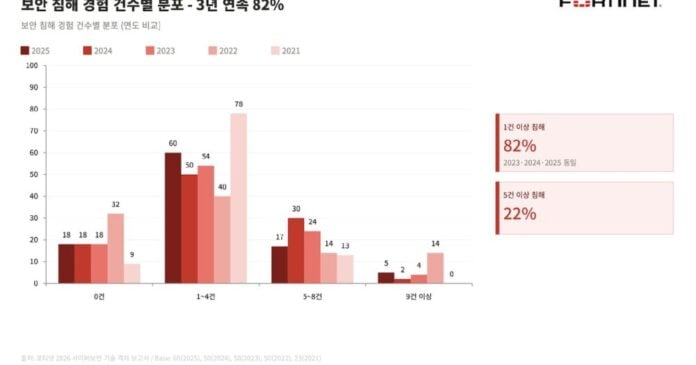
Korean companies are bleeding billions of won to cyber attacks, with more than eight out of ten corporations experiencing security breaches in the past year. The financial damage has reached an average of 4 billion won per affected company, marking a 37% increase from the previous year.
The alarming figures come as businesses struggle with a critical shortage of cybersecurity professionals, leaving them vulnerable to increasingly sophisticated attacks. Recovery times are stretching longer, with companies now taking over two months on average to bounce back from breaches.
Security company Fortinet released findings from its “2026 cybersecurity skills gap report” on June 1st, based on a survey of 60 domestic IT and cybersecurity decision-makers conducted in December 2025. The survey included executives from manufacturing (25%), education (17%), and technology sectors (8%).
The breach statistics paint a concerning picture of Korea’s cybersecurity landscape:
- 82% of companies experienced at least one security breach in the past 12 months
- 22% of corporations suffered five or more breaches
- 74% of affected companies spent $1 million or more on recovery efforts
- Average losses reached $2.6 million (about 3.9 billion won), up from $1.9 million the previous year
Recovery periods have also extended significantly. Companies reporting recovery times longer than one month jumped from 48% to 61%, while the average recovery period stretched from 1.7 months to 2.2 months. This extended downtime translates to massive productivity losses and additional costs beyond the immediate breach response.
The most common attack methods targeting Korean companies were DoS/DDoS attacks (39%), phishing attempts (37%), and ransomware (35%). These attack vectors reflect global trends where cybercriminals are using increasingly automated and scalable methods to target multiple organizations simultaneously.
The root cause of this vulnerability crisis is clear: a severe shortage of qualified cybersecurity professionals. Survey respondents identified the following primary factors behind security breaches:
- Lack of cybersecurity skills and trained personnel (65%)
- Insufficient security solutions for organizational needs (55%)
- Poor security awareness among staff (47%)
- Inadequate investment understanding by management (45%)
This skills gap problem is occurring against a backdrop of rapidly worsening global cyber threats. Fortinet’s separate “2026 global threat landscape report” shows ransomware victims worldwide increased by 389% from the previous year. Perhaps more concerning, the time between vulnerability disclosure and the first attack attempt has shrunk dramatically from an average of 4.76 days to just 24-48 hours.
Companies are turning to artificial intelligence for help, with 72% of surveyed Korean corporations either actively using or experimenting with AI-based cybersecurity solutions. However, the effectiveness of these tools appears to be declining. Only 68% of respondents said AI-based security tools help improve team efficiency, down 20 percentage points from 88% the previous year.
This drop suggests that while AI security tools are becoming more prevalent, companies lack the expertise to implement and manage them effectively. The technology alone isn’t enough without properly trained personnel to oversee and optimize these systems.
“This survey shows that domestic corporations are adopting AI for cybersecurity but are exposed to threats because they have not secured the personnel and governance to operate it,” said Ban Khun, acting country manager of Fortinet Korea. “For AI utilization in security to translate into tangible results, the introduction of tools must be accompanied by training specialized personnel to manage them and strategic responses at the management level.”
The findings highlight a critical challenge facing Korean businesses as they digitize operations while struggling to protect their digital assets. The combination of sophisticated threats, skills shortages, and longer recovery times creates a perfect storm that could significantly impact Korea’s economic competitiveness if not addressed through coordinated industry and government action.