
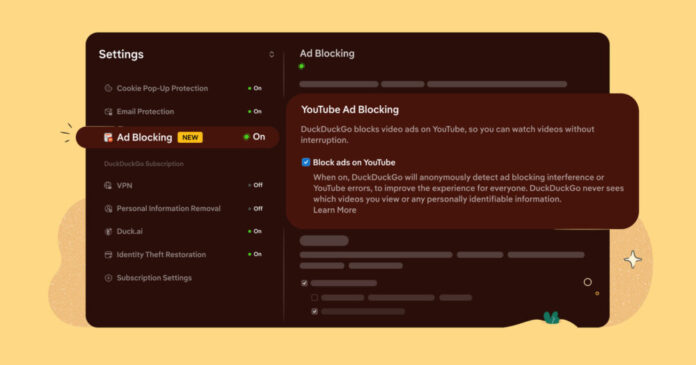
DuckDuckGo has announced that its browser can now block video ads, including those on YouTube. The feature is on by default for most users, meaning you don’t have to dig through settings or install any extensions to get it working.
The move is a clear challenge to Chrome, which has spent the past few years making life harder for ad-blocking extensions. Google’s changes to its extension platform effectively weakened tools like uBlock Origin on Chrome. DuckDuckGo is positioning itself as the obvious alternative for anyone frustrated by that shift.
Ad blocking has become one of the most contested areas in the browser market. Google earns most of its revenue from advertising, so Chrome’s approach to blocking has always come with built-in limits. Browsers like Brave and Firefox have leaned into privacy and ad blocking as key selling points. DuckDuckGo is now pushing further in that direction.
The ad blocking is built on filter lists from uBlock Origin, the same open-source project that powers many popular browser extensions. DuckDuckGo says it may also add its own rules on top of those lists to improve compatibility. A couple of things worth knowing before you switch:
- You may notice longer buffering times when the blocker is active
- Some ads might still slip through, so expect occasional hiccups
- The feature only works when you watch videos inside the DuckDuckGo browser, not in the YouTube app
The rollout covers most platforms already. It’s on by default for iPhone, Windows, and Mac users right now. Android users will get it enabled automatically soon, but can turn it on manually in the browser settings in the meantime. All platforms let you toggle YouTube ad blocking on or off from the settings menu whenever you want.
YouTube has been increasingly aggressive about pushing viewers toward its Premium subscription by cracking down on third-party ad blockers. The platform has experimented with detection tools that interrupt playback for users running blockers. DuckDuckGo building this directly into the browser at the system level is a harder target for YouTube to fight than a browser extension, though it’s likely the cat-and-mouse game will continue.