
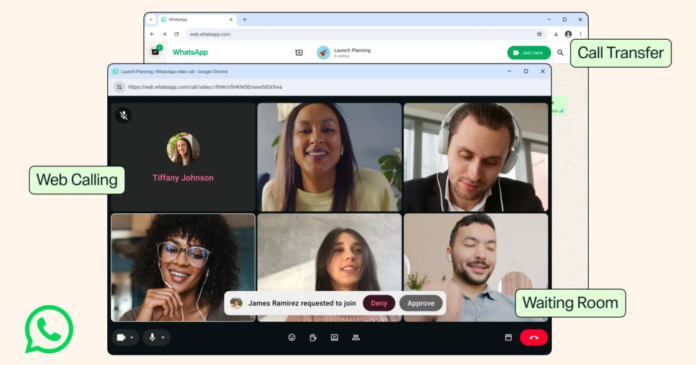
You can now make an end-to-end encrypted video call from WhatsApp without downloading a single app. That’s the headline. But the more interesting story is what this rollout tells us about where Meta is pushing WhatsApp, and whether the privacy promises hold up when you move calling from your phone to a browser tab on a shared computer.
WhatsApp has announced a set of updates to its calling features, the most significant being web calling. Users can now make and receive one-on-one and group audio and video calls directly through WhatsApp Web, no app download required. The company says calls are end-to-end encrypted, with no time limits and no cost. Screen sharing, reactions, and a full call history tab are all available in the browser.
The pitch is clear: reach more users in more situations. A college student on a library computer, a remote worker whose company IT policy blocks app installs, anyone stuck on a browser-only setup. WhatsApp is trying to remove friction. And removing friction has always been how Meta grows its user base.
The other features in this rollout are worth noting too. Call Transfer lets you move an active group call between devices without hanging up, so you can start a call on your phone and shift it to your desktop when you get home. A Waiting Room feature gives call hosts control over who joins and when, by requiring approval before participants enter. QuickHD promises high-definition video from the very first seconds of a call rather than the usual blurry startup. And Noise Suppression, which filters out background sound, is now available and adjustable from in-call settings.
- Web calling with screen sharing, reactions, and call history in the browser
- Call Transfer between mobile, tablet, and desktop without disconnecting
- Waiting Room with host approval before participants can join
- QuickHD for high-definition video from the start of a call
- Noise Suppression to filter background audio during calls
The encryption claim is the one that matters most here. WhatsApp has long positioned end-to-end encryption as its core privacy feature, and the company says that commitment extends to web calling. But browsers are not the same as dedicated apps. Session data, browser history, and cached credentials can all create exposure points that don’t exist in the same way on a native app, especially on shared or managed devices.
So yes, the call content may be encrypted. But the context around that call, who you called, when, from which machine, on which network, is a different conversation entirely. Meta’s business model is built on metadata, and nothing in this announcement changes that.
Still, for millions of users who simply want to make a free video call without jumping through hoops, this is a practical improvement. These features are rolling out gradually and will reach all users soon.