
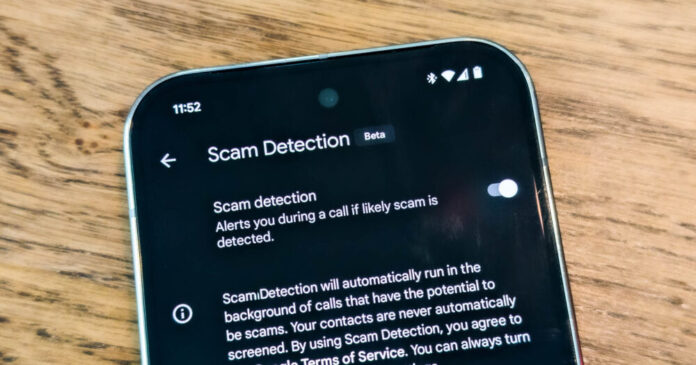
Google’s Scam Detection feature has quietly been creeping beyond its Pixel origins, and a new app teardown suggests the next stop is vivo. That’s good news for users who want protection from phone scammers. But every time a new manufacturer gets access to a system that monitors your live phone calls, even on-device, it’s worth asking who this really benefits and what the trade-offs are.
According to a teardown conducted by Android Authority, version 234.0.9 of the Phone by Google app contains references to vivo alongside an internal codename, “Sharpie,” which is tied to the Scam Detection feature. Samsung’s Galaxy S26 series was the second platform to get this capability after Pixel, and vivo now appears to be next in line. No specific vivo devices are confirmed, though speculation points toward the rumored vivo X500 series as a likely debut candidate.
So what does Scam Detection actually do? When you’re on a call, the feature uses on-device AI to monitor the conversation for patterns commonly associated with scammers. If someone asks you to pay via gift cards, for example, the system will trigger a visual pop-up and audio and haptic alerts. The feature doesn’t apply to calls with people already in your contacts list, which reduces false positives and, to some extent, limits the scope of what’s being analyzed.
The on-device angle matters. Google has consistently stressed that audio from these calls is not sent to its servers, and that processing happens entirely on the phone. That’s a meaningfully better design choice than a cloud-based approach. Still, “on-device” doesn’t automatically mean risk-free. It means you’re trusting the software on your phone, the manufacturer’s implementation, and the app itself to behave as described. With vivo, which uses its own dialer in China but relies on the Phone by Google app in global markets, the implementation path matters a lot. Users in different regions may end up with different versions of this feature, and that inconsistency is worth watching.
The bigger picture here is that Google is building a network of scam-detection capability across Android manufacturers, and that’s a significant shift. What began as a Pixel-exclusive feature is becoming part of the broader Android ecosystem. That has real value. Phone scams cause serious financial and emotional harm, and any tool that helps ordinary people identify a scam in real time is genuinely useful.
But as this feature expands, so does the surface area for potential misuse or misrepresentation. Each manufacturer that adds Scam Detection needs to be transparent about exactly how it works, what data is retained, and whether users have meaningful control over it. Samsung integrated the feature into its own phone app for the S26, which raises the question of whether Samsung’s implementation matches Google’s privacy claims exactly, or whether there are differences users don’t know about.
For vivo users, the key things to watch for when this eventually ships:
- Whether it appears in the Google dialer or a vivo-built app
- Whether it’s opt-in or enabled by default
- What the privacy disclosure actually says when you set it up
- Whether it’s available in all markets or restricted to specific regions
Scam detection as a concept deserves support. The execution, though, needs scrutiny every time a new player adopts it. An APK teardown is not a product announcement, so nothing here is confirmed. But the direction is clear, and that direction raises legitimate questions that manufacturers should be prepared to answer before, not after, launch.