
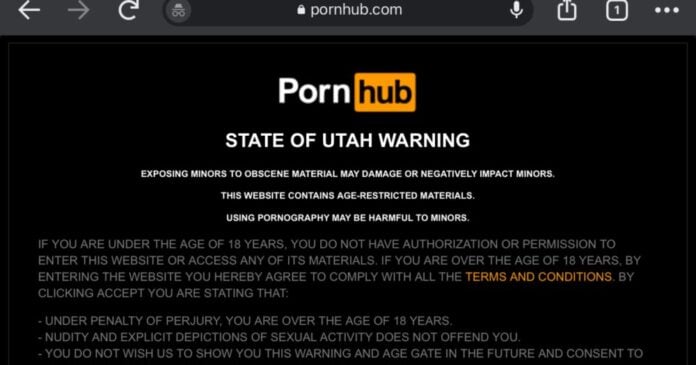
Utah passed what many consider the toughest anti-pornography law in the country. Now it’s agreed not to enforce it. That’s not a win for anyone yet, but it tells you something about how shaky the legal ground really is.
According to FOX 13 News, the Utah Department of Commerce and Aylo Freesites, the parent company of Pornhub, have entered into a joint stipulation. Utah will hold off on enforcing the law until U.S. District Court Judge David Barlow rules on Aylo’s request for a preliminary injunction, or until the state finishes drafting the administrative rules that would define exactly what adult websites must do to comply. In exchange, Aylo keeps its current geofencing in place, meaning Pornhub and related sites stay blocked for Utah IP addresses, a move the company framed as political protest against the state legislature.
The law itself is the problem here. It requires adult content websites to verify the ages of their users before granting access. It also goes after VPNs, targeting tools that people use to get around geographic blocks. That second part should alarm anyone who cares about online privacy. VPNs are used by millions of people for legitimate reasons, including journalists protecting sources, activists evading surveillance, and ordinary users who simply don’t want their browsing tracked. Treating VPN use as a workaround to be punished sets a dangerous precedent.
Aylo’s legal team has been clear: they don’t want minors on these sites either. But their argument is that Utah’s law forces websites to collect sensitive personal data from users just to prove they’re adults, and that creates enormous privacy risks. The state’s position is that Aylo is reading the law too broadly and that compliance shouldn’t be that hard. That’s a pretty dismissive response to a legitimate concern about mass data collection.
This case fits into a broader pattern. Several states have passed age-verification laws in recent years, and courts have pushed back on many of them on First Amendment and privacy grounds. Utah’s law is aggressive even by that standard. The VPN targeting element is something privacy advocates have flagged as particularly troubling because it essentially criminalizes a tool designed to protect user anonymity.
The temporary pause is not a ruling. Judge Barlow hasn’t decided anything yet. So the law still exists. The threat still exists. And depending on how the rulemaking process goes, the specific compliance requirements could make things worse for user privacy, not better. Watch this case closely. The outcome won’t stay inside Utah’s borders.