
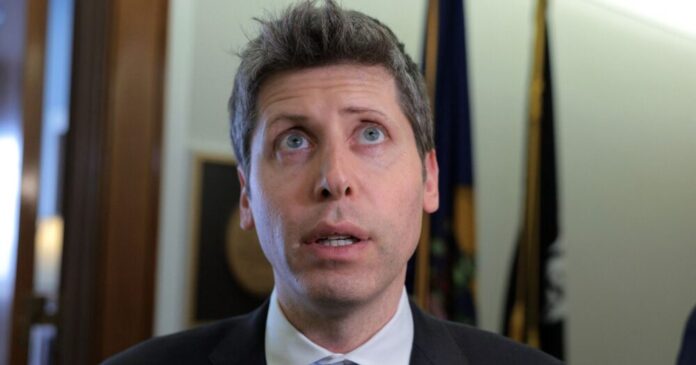
Sam Altman has said publicly that the AI industry should slow down. Now a state attorney general is asking a court to hold him to that. Florida AG James Uthmeier filed an emergency motion Monday asking a state court to block OpenAI from training new models without independent safety oversight, and to cut off minors from ChatGPT entirely. According to Engadget, Uthmeier’s office also wants OpenAI banned from marketing its product as safe, accurate, or reliable, and from designing features that keep users engaged past the point where a conversation turns dangerous.
This didn’t come from nowhere. Florida sued OpenAI in June 2026, following a criminal investigation launched in April in the aftermath of a mass shooting at Florida State University in 2025. The suspect allegedly used ChatGPT before the attack. That’s the thread Uthmeier’s office has been pulling ever since.
In a video posted to X, Uthmeier was blunt: “No new model development without independent safety guardrails; no more harvesting children’s data; no more calling this product safe, accurate, or reliable; no more pretending it’s human; no more tricks designed to keep users talking past the point of danger.” He added that if Altman meant what he said about slowing down frontier development, he could join Florida’s request to the court. If not, he asked the court to step in.
OpenAI has a ready answer. When the criminal investigation first launched, the company told Engadget: “ChatGPT is a general-purpose tool used by hundreds of millions of people every day for legitimate purposes. We work continuously to strengthen our safeguards to detect harmful intent, limit misuse, and respond appropriately when safety risks arise.” The company did not respond to Engadget’s request for comment on Monday’s motion.
The brief from Uthmeier’s office uses OpenAI’s own words and disclosures against it. It points to Altman’s public calls for regulatory guardrails on frontier models, and to OpenAI’s security disclosures following the Hugging Face hack, as evidence that even the company knows its products carry serious risks. “It is a rare request for an injunction where the Defendants themselves have publicly endorsed it,” the brief reads.
From a privacy and safety standpoint, the children’s data angle is significant. ChatGPT has long faced questions about age verification, data collection from minors, and what happens when a vulnerable user’s conversation takes a dark turn. Florida’s motion puts those concerns into a courtroom for the first time in a meaningful way.
This is also not the first time OpenAI has been tied to violence. In February 2026, Canadian regulators called on OpenAI to change how it handles threats of harm after a report revealed the company flagged a user’s account linked to a 2025 mass shooting but never alerted law enforcement. OpenAI later agreed to updated policies around cooperation with Canadian authorities.
So a pattern is forming. And whether or not Florida’s emergency motion succeeds, the legal pressure on OpenAI to answer for real-world harm is only getting harder to brush off.