
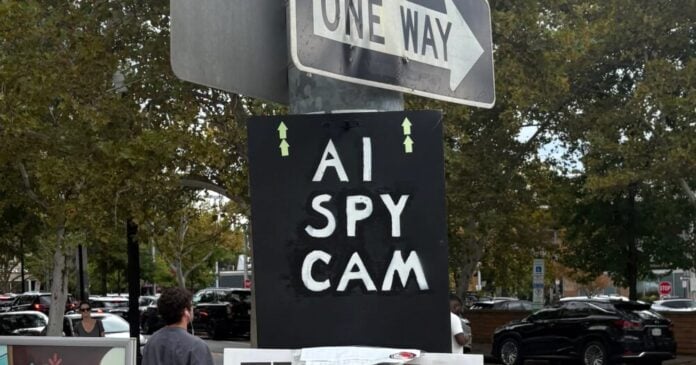
A company worth over $8 billion is quietly scanning your car every time you drive past one of its 120,000 cameras. And until last week, the federal government had no problem using that data. Senator Bernie Sanders wants to change that. He introduced the Ban Flock Act on Friday, a bill that would bar federal agencies from using automatic license plate readers (ALPRs) and from tapping into data collected by local police departments or private companies running these systems.
Despite the name, the bill doesn’t single out Flock Safety specifically. It covers all ALPR systems. That’s actually the smarter move, because the problem isn’t just one company. It’s a whole surveillance architecture built on the assumption that tracking where your car goes is somehow less sensitive than reading your messages.
The bill does carve out exceptions for toll collection and any future Congressional-approved uses, though those would have to cap data retention at 48 hours. Right now, Flock only recently dropped its default retention window from 30 days to seven, after public pressure mounted. Seven days is still long enough to reconstruct a person’s weekly routine in detail.
State and local governments that don’t comply would lose federal grants from five departments, including the Justice Department and the Department of Homeland Security. Americans could also sue the federal government over violations, and state attorneys general could bring enforcement actions. Those are real teeth, if the bill passes. And that’s a big if. Most bills don’t make it, and this one will face serious pushback from law enforcement lobbying groups that have become dependent on Flock’s network.
Flock processes more than 20 billion vehicle reads per month, according to Sanders. The company has been under growing pressure from communities canceling contracts, and CEO Garrett Langley has responded with policy tweaks. Officers now face an audit tool that locks them out pending review when unusual search patterns are flagged. That sounds reassuring until you look at what prompted it: a former Milwaukee police officer who searched for his ex-partner and her former boyfriend 179 times, logging each one as an “investigation.” He pleaded guilty to misconduct. The system didn’t stop him. A policy change after the fact did.
This bill also signals something broader. Public tolerance for passive mass surveillance infrastructure is shrinking. Communities are not just complaining, they’re canceling contracts. Legislators are introducing bills. And the debate is shifting from “should police have these tools” to “should this data even exist in the first place.” That’s a more honest framing of the problem.
Representative Alexandria Ocasio-Cortez and Senator Jeff Merkley are co-sponsors. The bill faces long odds. But the conversation it forces is overdue.