
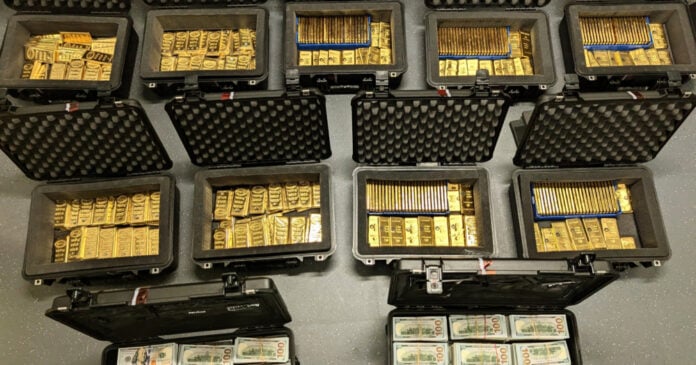
Law enforcement found over $46 million worth of gold bars inside a CIA officer’s house. That single detail tells you almost everything you need to know about how badly the U.S. intelligence community’s internal controls failed here.
According to TechCrunch, David J. Rush, a Virginia resident and senior CIA officer, has pleaded guilty to one count of wire fraud after admitting he fabricated a top secret government program and used it to steal nearly $200 million. Along with the gold, investigators seized luxury cars, watches, and more than $2 million in cash from his home.
Rush had worked at the CIA since 2010 in a division focused on developing hacking tools and espionage techniques. He held significant authority over intelligence programs and spending. That authority is the core of this story. Court filings state that Rush “effectively acted as his own approving official, enabling him to expend substantial amounts of United States government money without meaningful scrutiny.” He didn’t hack a system. He exploited a structural gap: too much trust, not enough oversight.
The scheme itself was brazen. Over the course of 2025, Rush constructed what he claimed was a special access program, the kind of highly classified operation so sensitive that even top-cleared officials don’t automatically get read into them. He framed it as a fake “continuity of government” plan, the type of contingency program designed to keep government functions running during a war or catastrophe. Using that fabricated framework and phony government contracts, he tricked an unnamed defense contractor into purchasing large quantities of gold, which he then kept.
He also reportedly lied about his education and military background to get hired at the CIA in the first place. So the failure started before he even walked through the door.
The plea deal means there will be no trial. And that matters for reasons beyond Rush himself. A public trial would have forced the government to explain, on the record, how someone faked credentials to join a premier intelligence agency, then ran a multimillion-dollar fraud undetected for over a year. A guilty plea closes that door. The public gets a conviction. The institution avoids scrutiny.
This case fits into a pattern that anyone watching government security clearance processes will recognize. Insider threats are consistently rated among the most serious risks to classified programs, yet oversight mechanisms repeatedly fail to catch them until the damage is massive. Rush faces up to 20 years in prison when sentenced in January 2027. But the harder question, how this was allowed to happen at all, is one the CIA is unlikely to answer publicly.