
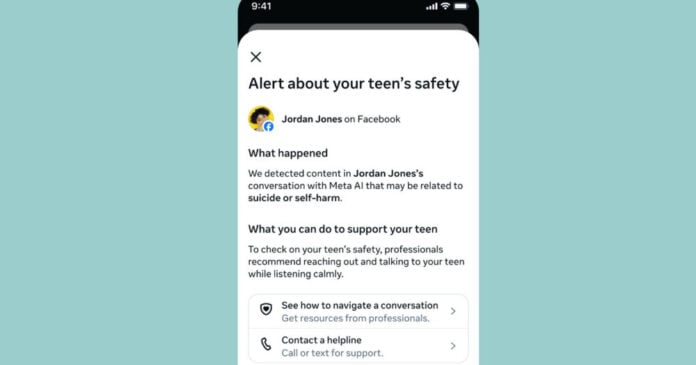
Meta wants to be your teen’s safety net and its surveillance system at once. The company has expanded its parental alerts for suicide and self-harm searches from Instagram to Facebook, and it now covers conversations with Meta AI too.
Here’s how it works. If a supervised teen “repeatedly” searches for self-harm content “within a short period of time,” parents get notified. The same goes for Meta AI chats that “suggest they may be at risk of suicide or self-harm.” Alerts arrive by text, email or WhatsApp, plus a push notification in the parent’s app. They don’t reveal the search terms or the chat contents. They nudge parents to talk to their kid and point to helplines.
Withholding the contents is a sensible choice. But look at what’s missing: the actual criteria. Meta says it picked a threshold of “a few searches within a short period of time” while “erring on the side of caution,” and that it wants to avoid unnecessary notifications. Those two goals pull against each other, and nobody outside Meta can check where the line sits. How many is “a few”? How short is “short”? And how does a classifier decide that an AI chat “suggests” risk? That last one is a judgment call made by a model, and models misfire.
False positives matter here. A teen researching a school project, worried about a friend, or just curious could trigger an alert and end up in an awkward, possibly harmful conversation at home. For some teens, especially those in unsupportive households, knowing that searches are flagged may also push them away from seeking help, or toward platforms with no safeguards at all.
Then there’s the data question. For these alerts to work, Meta has to monitor and classify teens’ searches and AI conversations about some of the most sensitive topics imaginable. The company hasn’t said how long that signal is retained or whether it feeds anything else. Given Meta’s history with data, that silence counts.
The context is plain enough. Meta is under heavy regulatory and legal pressure over teen safety, and the feature belongs to its push to move teens into parent-supervised “teen accounts.” Those accounts give caregivers more control over privacy settings, limit sensitive content, and restrict contact with adults. Notifications like these are a visible, easy-to-point-to answer for lawmakers and critics.
Early warning for parents could help some families. That’s real. Still, a safety feature built on opaque thresholds and sensitive monitoring needs independent scrutiny, not just a press release. Until Meta publishes more detail, treat the promise with caution.
If you or someone you know is struggling or in crisis, help is available. Call or text 988 or chat 988lifeline.org.