
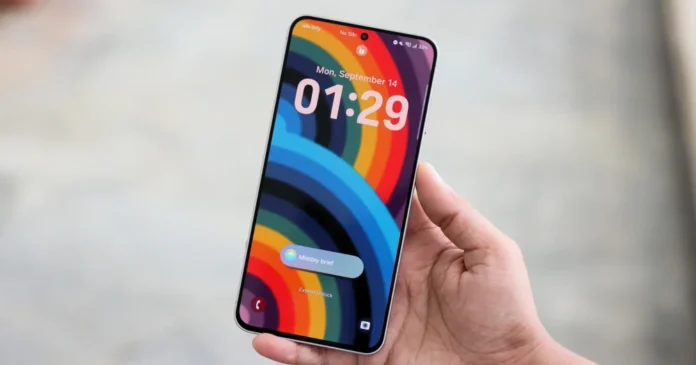
Caller ID spoofing is one of the dumbest, most effective scams around. Make your number look like a saved contact and people pick up. That’s the whole trick, and phone makers have been slow to treat it as their problem.
That may be changing on Samsung phones. According to SamMobile, citing code references found by AndroidAuthority, Samsung’s Phone app is getting a feature called “Caller device check.” Google introduced a similar tool for Pixel devices last year and said at the time that other manufacturers would eventually get it. Galaxy phones could see it with One UI 9.5.
The mechanism is straightforward. When a call comes in that claims to be from a saved contact, the phone sends a covert RCS message to that contact’s device to confirm the call really originates there. The check reportedly needs up to 48 bytes of data. Samsung and Google say no contact information is sent or uploaded to any server for this purpose. If the caller can’t be verified, the app warns you the call might be harmful.
Now the skeptical part. That no-upload claim is worth taking at face value only until someone audits it. RCS is not end-to-end encrypted across every carrier and platform setup, and a verification ping still creates metadata, even if it’s tiny. Who sees that signal, and for how long, matters. We have only code strings and vendor assurances so far, not a technical write-up.
There’s also a built-in limit. The check only works against contacts saved in your phone. Unknown callers, which is where most scam calls actually come from, get no verification. Samsung’s app already has spam detection for those, but that’s a different system with its own data trade-offs, and it often depends on cloud lookups.
Still, this is a sensible approach. Spoofing a trusted contact is the nastiest version of the scam, the one behind fake emergency calls to relatives and impersonated bosses asking for urgent payments. Carriers have been rolling out STIR/SHAKEN call authentication for years, with patchy results, so a device-level check that doesn’t depend on the carrier fills a real gap.
It also shows how much anti-fraud work is now flowing through RCS. That’s good for utility, but it ties your protection to a messaging standard that Google largely steers. Samsung adopting Google’s design is convenient, and it also deepens that dependence.
What’s unclear is timing. Samsung might hold the feature for One UI 9.5, or push it through a Phone app update, which would reach people faster. For anyone who has nearly answered a convincing fake call, faster is better. Just don’t treat a missing warning as proof a call is safe.