
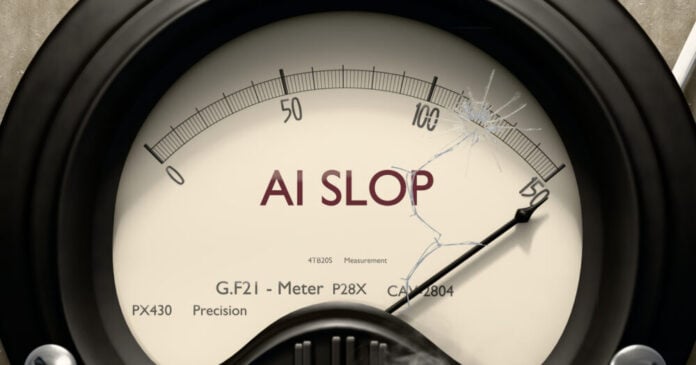
You never opted in to AI slop in your feed, and no platform will let you fully opt out. That’s the uncomfortable reality behind the new filtering tools some social networks are starting to ship.
According to Engadget, Pinterest, LinkedIn and TikTok now give users some say over how much AI-generated content they see. Most of these controls only reduce the volume. They don’t block anything. And the technical reason matters: platforms identify AI content through labels and metadata, which can vanish when a file is edited or reuploaded. A filter built on that foundation will always leak.
What the three platforms offer
Pinterest has the most granular option. Go to Settings, then Refine your recommendations, then AI content. You can turn it down per category, including art, beauty, fashion, food, health, home decor and sport.
TikTok’s control is still in testing. If you’re in the test group, you’ll find a slider under Settings and Privacy, Content Preferences, Manage Topic. Move it left to cut AI content to the minimum. If it isn’t there, you wait.
LinkedIn takes a different route. It introduced classifiers in July 2026 to cut the reach of AI slop, so there’s no setting to flip. You can report posts with the “Seems like AI slop” button in the three-dot menu. That won’t necessarily limit a post’s reach, but it should show you fewer like it and help train the classifier.
Instagram, Facebook, YouTube and X: DIY only
These four have no dedicated setting. The advice is to train the recommendation algorithm by skipping slop quickly and using feedback tools like “Not interested” on Instagram and X, or “Don’t recommend channel” on YouTube.
Think about what that means. You’re told to manage your feed by feeding the same engagement-tracking system more data about your behavior. It works, but it’s the platform’s profiling machinery doing the sorting, and you pay for it with more signals about what you watch, skip and dislike.
The heavier option is a reset. Instagram has Reset suggested content under Content preferences. TikTok offers Refresh your For You feed. On YouTube, you have to clear your entire watch history, which wipes useful recommendations along with the junk.
The bigger picture
Platforms created this problem by promoting generative tools and engagement-driven feeds, and now they sell the cleanup as a feature. Note the gaps: no detail on classifier accuracy, no word on how reports are used, and no commitment to a true block. A slider that says “less” is a product decision, not a guarantee.
Until platforms adopt tamper-resistant provenance signals that survive reuploads, expect partial filters at best. In the meantime, use the controls that exist, report what you see, and treat any claim of an “AI-free feed” with suspicion.