
President Trump and his delegation completed a two-day summit in Beijing with Chinese President Xi Jinping on Friday, but their departure included an unusual security protocol. Before boarding Air Force One, all travelers had to surrender items collected during the trip, including burner phones, credential badges, and lapel pins issued by China.
The discarded items were thrown into a bin at the bottom of the plane’s stairs, according to White House press pool reports. “Nothing from China allowed on the plane,” wrote Emily Goodin, the White House correspondent for the New York Post, in a post on X.
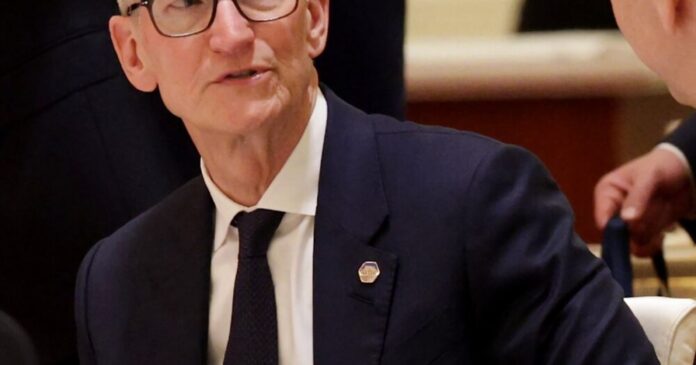
Photos from the summit show multiple delegation members wearing Chinese-issued lapel pins, including Trump himself, White House communications director Steven Cheung, Apple CEO Tim Cook, Nvidia’s Jensen Huang, and Secret Service agents. All these items had to be disposed of before departure.
While officials didn’t explain the reasoning behind the disposal order, the move reflects longstanding security concerns about potential surveillance equipment. China remains a key adversary of the United States, and U.S. intelligence agencies have repeatedly warned about Beijing’s advanced espionage capabilities and cyberattack operations.
The concern isn’t theoretical. Foreign governments have previously used seemingly innocent gifts and promotional items to conduct surveillance. Small electronic devices can easily be embedded in pins, badges, or other commemorative items without detection. The burner phones used during the trip were likely considered compromised, which aligns with their intended purpose as disposable devices for high-risk environments.
This incident highlights the complex security challenges that accompany diplomatic missions to countries with sophisticated intelligence operations. Even during cordial summits, security protocols assume that any items provided by the host nation could potentially contain surveillance equipment.
The White House has not responded to requests for comment about the specific security concerns that prompted the disposal order. However, the precaution demonstrates how seriously U.S. security agencies take the threat of Chinese espionage, even during official diplomatic engagements at the highest levels of government.