
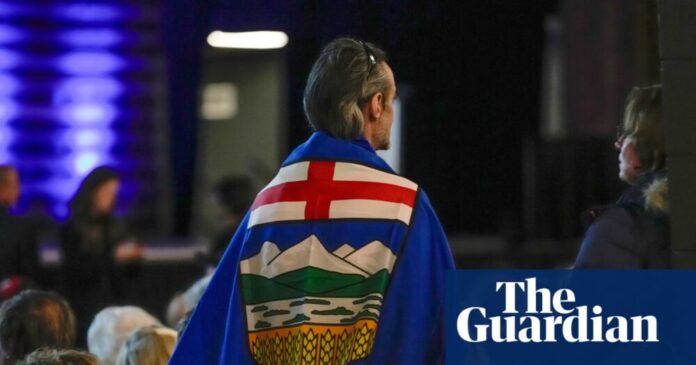
Alberta separatists have delivered more than 300,000 signatures to elections officials in western Canada, pushing for an independence referendum in the oil-rich province. But their campaign hit a major snag when a separatist-linked group posted the personal data of nearly 3 million residents online in one of Canada’s largest data breaches.
The leak has sparked fears of a political interference crisis and raised serious questions about election security. The database contained names, home addresses, and contact information for roughly 2.9 million voters, including prominent politicians, judges, Crown prosecutors, and journalists.
On Monday, hundreds of supporters gathered in Edmonton as Mitch Sylvestre, a separatist leader, delivered the petitions to Elections Alberta. “We’re not like the rest of Canada,” Sylvestre told reporters. “We’re 100% conservative. We’re being ruled by Liberals who don’t think like us.”
The separatist movement taps into long-standing grievances in Alberta about federal payments and challenges getting fossil fuel resources to market. Recent polls show separatist support ranging from 18% to 30% among residents. The timing is significant as Canada faces growing regional tensions and questions about national unity.
Last year, Alberta Premier Danielle Smith lowered the signature requirement for constitutional referendums from 588,000 to roughly 178,000. The provincial government also removed powers from Alberta’s chief electoral officer, allowing referendums to pose questions that could violate the Canadian constitution.
The separatists want their question – “Do you agree that the Province of Alberta should cease to be part of Canada and become an independent state?” – added to an October referendum that will also cover immigration, healthcare, and constitutional issues.
However, the process faces major legal hurdles. Indigenous nations in Alberta have filed court challenges, arguing that any separation vote would violate their treaty rights with Britain that predate Alberta’s creation. “Alberta has no right to secede from Canada and no right to take Treaty No 8 territory,” Sturgeon Lake Cree First Nation stated in its court filing.
The First Nation also warned about foreign interference risks, noting that separatist activists held secret meetings with Donald Trump administration members last year. They argued a vote to leave Canada “will enable foreign interference from the most powerful nation to the south.”
The data breach adds another layer of controversy to an already complex situation. The voter list was initially provided to the Republican Party of Alberta, a legally registered entity, but was then improperly shared with the Centurion Project, a pro-separation group that allegedly used it to target voters.
Both Elections Alberta and the Royal Canadian Mounted Police have launched investigations into the breach. A court ordered the database removed, but experts warn the data has likely been copied and shared already. The incident raises questions about how sensitive voter information is protected and shared in Canada’s democratic system.
Jared Wesley, a University of Alberta political scientist, called for a public inquiry “before [Albertans] cast another ballot.” He warned that Elections Alberta investigating itself creates a conflict of interest as the agency “is now defending its own response, its own mandate, and the integrity of the democratic system it administers.”
Despite the legal challenges and data breach fallout, separatist leaders remain confident. “We expect our question to be on the ballot this October regardless of what the courts say, regardless of what Elections Alberta says,” Jeffrey Rath, one of the separatist leaders, told reporters.
The situation represents a new challenge for Canada, which has dealt with Quebec separatism for decades but never faced a serious push for a province to join the United States. The combination of separatist momentum, legal obstacles, and cybersecurity concerns creates an unprecedented test for Canadian democracy and election integrity.