
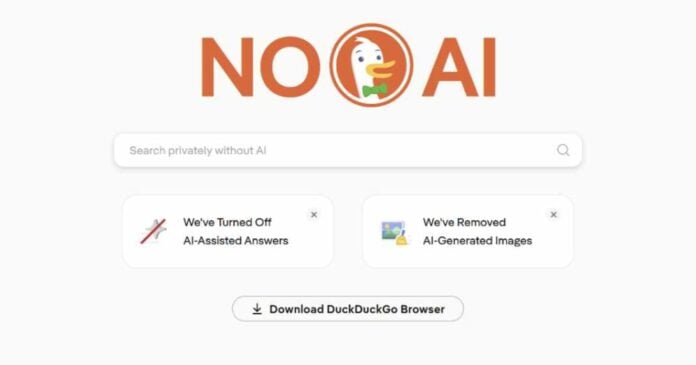
Google’s recent I/O conference generated plenty of buzz with its AI announcements, but not all reactions were positive. The tech giant’s decision to integrate AI across its search products with no opt-out option has sparked a notable backlash, with privacy-focused search engine DuckDuckGo emerging as a clear beneficiary.
The alternative search provider reported dramatic usage increases following Google’s AI-heavy announcements, suggesting users are actively seeking alternatives to the search giant’s AI-first approach.
“Google is force-feeding AI with no way to opt out,” says DuckDuckGo founder and CEO Gabriel Weinberg. “As a result, their results are getting worse, not better. We want to be the place that puts users in charge and allows them to decide how much or how little AI they want.”
The numbers tell a compelling story about user sentiment. Through the Memorial Day weekend, DuckDuckGo saw mobile app installations surge 18.1% week-over-week in the U.S., with peak growth hitting 30.5% on May 25. iPhone and iPad users drove the highest adoption rates, with average growth of 33% and peak growth reaching 69.9% on May 25.
Web usage also jumped significantly. Visits to DuckDuckGo’s “No AI” search engine version grew 22.7% on average during the holiday weekend, peaking at 27.7% on May 24. The company notes that growth in the U.S. significantly outpaced international adoption, suggesting this surge directly responds to Google’s announcements rather than reflecting broader global trends.
This user migration highlights growing concerns about AI integration in core internet services. While tech companies like Google view AI as the future of search, many users prefer having control over when and how they interact with artificial intelligence. DuckDuckGo’s approach offers both sides – completely AI-free search alongside optional AI features like Search Assist and Duck.ai for users who want them.
“One of the most popular search features we’ve launched in years is a filter that removes AI images from image results,” notes DuckDuckGo’s chief communications officer Kamyl Bazbaz. “People just want a choice. Google can force AI on its users without fear because a federal judge already ruled in U.S. v. Google: ‘Google is a monopolist, and it has acted as one to maintain its monopoly.'”
The timing of this surge matters beyond just user preferences. It comes as regulators scrutinize Google’s market dominance and as the company faces antitrust challenges. When users have limited alternatives due to monopolistic practices, forced feature adoption becomes easier to implement – but also more likely to generate backlash when alternatives exist.
For DuckDuckGo, this represents validation of its privacy-first, user-choice approach. The company emphasizes that all searches remain private, with no collection of search histories or chat data, and nothing used for AI training. This stands in stark contrast to Google’s data collection practices, which fuel both its advertising business and AI development.
While these percentage gains likely represent a small fraction of Google’s massive user base, they signal something important: users will migrate when given compelling alternatives. The fact that growth accelerated through a holiday weekend, when internet activity typically drops, suggests underlying demand extends beyond initial reaction to Google’s announcements.