
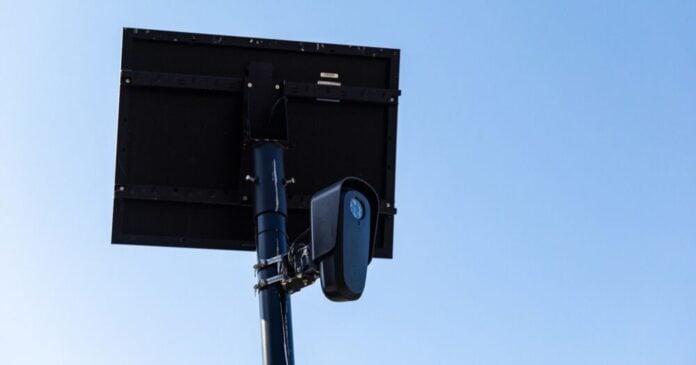
Ninety-eight percent of automatic license plate readers in Florida sit on local roads and private property. Florida’s new ban touches exactly none of them. That’s the first thing worth knowing about the state’s much-publicized crackdown on Flock Safety cameras, and it tells you almost everything about how seriously regulators are actually taking this problem.
Florida’s Department of Transportation has officially banned police from placing license plate readers on state roads, following a directive from Governor Ron DeSantis, who said in August 2026 that use of the technology had become “out of control.” A one-page memorandum from DOT Chief Operating Officer Will Watts immediately revoked all existing permits and gave police 30 days from August 31 to remove their cameras from state roads. The department also said it would stop issuing future permits within its authority.
The memo’s language is striking. It cites “the recent exponential increase in deployments along our roadways, coupled with concerning reports of misuse, data privacy concerns and surveillance schemes” as justification for what it calls preserving Floridians’ “sovereignty and quality of life.” Strong words. But sovereignty over what, exactly, if the vast majority of these cameras remain untouched?
Automatic license plate readers have existed for decades. You’ve probably passed one at a toll booth or a red-light camera without thinking much about it. Law enforcement agencies use them to find stolen vehicles, locate missing persons, and build leads in criminal investigations. A week before Florida’s ban was announced, one of these systems helped track a murder suspect who had fled to West Virginia. That’s the case police departments always reach for when defending the technology, and it’s not nothing.
But Flock Safety, the ALPR company at the center of most of the 2026 backlash, has faced documented cases of misuse, and its attempts to respond, including software updates and shorter data retention policies, haven’t quieted public anger. Vandalism of its cameras has become a recurring story. And regulators across the country are starting to move.
- The Los Angeles Police Department suspended its Flock contract in July 2026.
- Two Ohio counties paused Flock camera use after misuse allegations.
- Texas Governor Greg Abbott paused funding for state agencies trying to buy Flock hardware.
- Jacksonville and Okaloosa County sheriffs committed to removing cameras from their jurisdictions.
Still, most of these moves target Flock specifically rather than license plate readers as a category. That distinction matters. It lets officials look responsive without actually confronting the broader question of whether mass vehicle surveillance on public roads is something residents should have consented to in the first place.
Florida’s ban is a real step, just a small one. Changing what sits on state roads doesn’t change the surveillance reality for most people driving through Florida. For that, DeSantis himself acknowledged, you need new laws. And new laws require political will that, so far, nobody has fully committed to finding.