
Your Google Account probably holds more than you realize: photos, emails, documents, passwords, payment info. Losing access to it is a real problem, and for many people it happens at the worst possible time, when they do not have their usual phone or computer nearby. Google wants to reduce those moments of frustration.
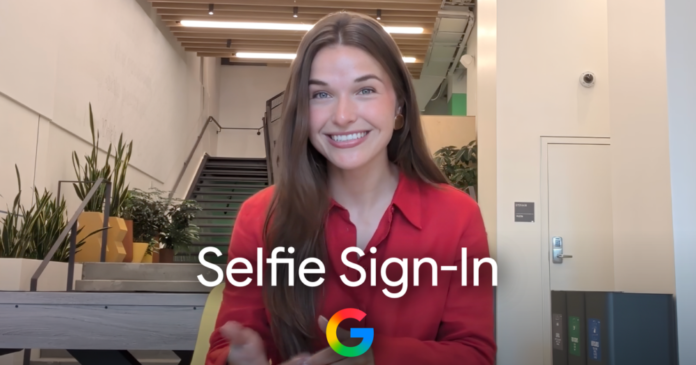
On July 23, Google announced a new sign-in option called selfie video. It is designed to give you another way back into your account when your normal methods are not available. Think of it as a backup key, one that uses your face instead of a code or a trusted device.
The setup process is straightforward. You look at your device’s camera and follow a few guided head movements. That captures multiple angles of your face, which Google stores securely and uses only for sign-in. If you ever get locked out, you record a new selfie video, and Google compares it to the one you set up to confirm it is really you.
Privacy was clearly part of the thinking here. Google says the video is recorded only with your consent and encrypted when stored. You can delete it at any time from your Google Account settings. It will not be used for anything else unless you actively choose to share it for additional purposes.
The system also has defenses built in against fake sign-in attempts. Google uses several layers of checks, including:
- Matching the new video against your saved selfie
- Requiring live head movements so a static photo or pre-recorded video will not work
- Standard security checks to flag suspicious sign-in behavior
That last point matters a lot. Deepfake technology has improved to the point where face-based authentication has become a genuine security debate in the industry. Google’s use of movement prompts and liveness detection is a direct response to that concern, though no system is completely foolproof and the company will likely need to keep updating its detection methods as AI-generated video gets better.
This move fits into a broader push by major tech companies to give users more flexible account recovery options. Passkeys, physical security keys, recovery contacts, and now selfie video, the goal is to reduce reliance on SMS codes and passwords, both of which are easy to lose or compromise. Selfie video does not replace any of those methods; it sits alongside them as an additional option.
For everyday users, the practical value is simple: fewer situations where you are completely locked out. Account lockouts are one of the most common support issues tech companies deal with, and options that let users self-recover without contacting support are good for everyone.
You can check if your account is eligible and set up selfie video now at g.co/signin-selfie.