
Google is betting that users will trade a slice of their message privacy for protection against scammers. That’s a reasonable bet, given how sophisticated phone scams have become. But the details matter, and some of Google’s details deserve a closer look.
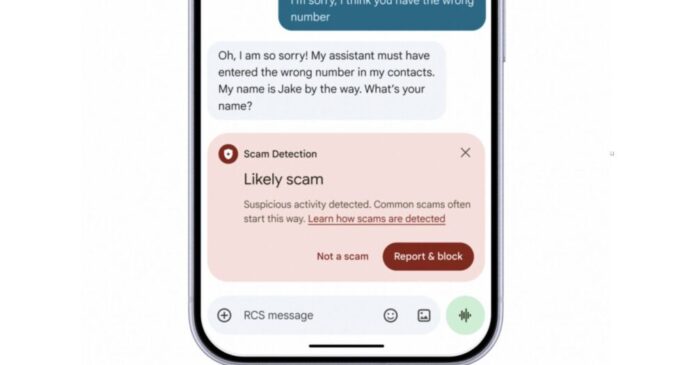
As reported by Engadget, Google has announced a set of scam protection tools for Android, the most significant being an opt-in feature in its Messages app that uses Gemini AI to analyze incoming texts and flag potential scams. The feature, called Scam Detection, reads the sender’s apparent intent and issues a warning if something looks suspicious. Google’s own example shows a classic social engineering attempt: a stranger claims to have a photo of you with your dog, says they have the wrong number when challenged, and then tries to keep the conversation going by asking your name. Subtle, but Gemini is supposed to catch it.
Google says message analysis happens inside what it calls “Private AI Compute,” a secure, encrypted processing environment that it claims is inaccessible to anyone, including Google itself. Gemini Nano, the on-device version of the model, also scans links in messages before you tap them. That on-device processing claim is important. If true, it means your texts aren’t being sent to Google’s servers for analysis. But “inaccessible even to Google” is a strong claim, and Google isn’t exactly a neutral party when it comes to evaluating its own privacy promises. Users who opt in should understand they are still trusting Google’s architecture, even if they’re not trusting Google’s servers directly.
The link scanning feature will be limited to higher-end hardware at launch, specifically Google Pixel 10 and above, Samsung Galaxy S26, Galaxy Z Flip 8, and Galaxy Fold 8, along with other select devices. That kind of hardware restriction is common with on-device AI, since local processing is resource-intensive. It does, however, mean the users most likely to be targeted by scams, those on older or cheaper Android devices, may not get the strongest protections.
There’s also a broader expansion of the existing Scam Detection feature that already runs in chat notifications on Pixel. Google is opening that up to devices from Honor, Motorola, OPPO, OnePlus, realme, vivo, and Xiaomi, expected later this year. The notification-level warning is useful because you get the alert before you even open the message.
The other announcements are less controversial and worth noting. Starting later this month, all devices running Android 15 or newer will automatically hide passwords, banking information, and credit card numbers when screen sharing is active and Chrome or Android WebView is open. No opt-in required. That’s a practical, low-friction privacy improvement.
- Scam Detection in Messages: opt-in, uses Gemini AI, rolling out in coming weeks
- Link scanning in Messages: on-device via Gemini Nano, limited to select newer devices
- Screen-sharing privacy protection: automatic, Android 15 and up, rolling out later this month
- Call forwarding protection: blocks apps from secretly enabling call forwarding, coming to Pixel and select devices in early December
- Bank impersonation detection: live in Brazil since June, has already blocked over three million fake calls
The call forwarding protection is particularly interesting. Scammers sometimes trick people into dialing MMI codes, short number strings that silently redirect your incoming calls. Android will now flag these attempts. It’s a specific, technically grounded defense against a real attack vector that most users don’t even know exists.
The Brazil bank verification feature is the most mature of the bunch. Android verifies that incoming calls claiming to be from a bank actually are, and hangs up automatically if the check fails. Three million blocked fake calls since June is a real number. Google says it will expand the feature to more partner banks, though there’s no timeline for a US rollout.
So where does this leave users? The scam problem is genuinely serious, and Google’s tools address real threats. But the company asking you to trust an AI model with your private messages, even an on-device one, is a significant ask. The opt-in design for Scam Detection is the right call. What Google should also do is publish clear, auditable documentation of exactly how Private AI Compute works. “Trust us” has never been a satisfying answer from a company built on data.