
Here’s the pitch: give a startup you’ve never heard of access to your email, calendar, hard drive, and credit cards, and trust that they won’t misuse it. Hark, founded less than a year ago by serial founder Brett Adcock, is betting that users are ready for exactly that. The company launched Hark Pro this week, a full-screen AI assistant that doesn’t just answer questions. It uses your computer for you.
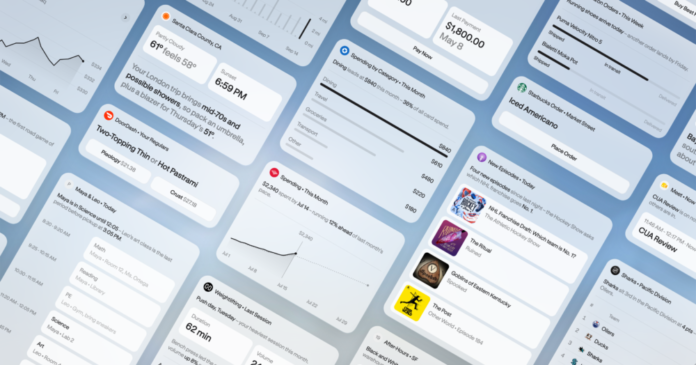
The product is free to use, with a paid tier for heavier users. Visually, it’s ambitious. There’s a central chat dialog, a feed of suggested tasks, and what Hark calls ‘panels,’ mini-dashboards built around your interests. The background image adjusts to your local weather and time of day. It’s polished. But polish is the easy part.
The harder question is what Hark actually does with everything it learns about you. Abidur Chowdhury, a former Apple designer who leads product design at Hark, is direct about the competitive framing: ‘We’re not here to sell you ads and steal your data.’ That’s a dig at Meta and OpenAI, and it’s meant to reassure. But reassurance from a startup isn’t a privacy policy, and good intentions don’t survive acquisition, funding pressure, or a breach.
Chowdhury says the system focuses on task-related understanding, not building personal profiles. But the line between ‘understanding you to complete tasks’ and ‘building a detailed model of your behavior’ is thin. If Hark knows your expenses, your travel habits, your meetings, and your DMV renewals, it knows a lot. That data is enormously valuable, which is exactly why the privacy promise deserves more scrutiny than a quote in a demo.
One design choice does stand out, and it’s genuinely interesting. Hark shows users a small window of the AI agent browsing the web in real time. Most competitors do this invisibly. Making it visible is a real attempt at transparency, and that matters when you’re handing over control of your digital life to software.
Hark Pro competes in a space that includes Muse, Instinct, Dots, and others. Chowdhury’s claim is not that Hark is faster, but that it actually completes tasks end-to-end without handing control back to the user mid-process. That’s a meaningful distinction if true.
The company also says it trained its model specifically for computer use rather than relying on a general frontier model. That may make it faster and cheaper for these tasks, but it raises a fair question about what broader reasoning capability gets traded away in the process.
And there’s a hardware angle. Hark plans to release an AI-native device in 2027. Chowdhury is coy about the form factor, dismissing wearable cameras for their ‘creep factor’ while promising something that has ‘never ever existed before.’ That could be genuinely new. It could also be marketing. We won’t know until 2027.
So the product is interesting. The privacy story still needs work. And the broader trend it sits inside, assistants that want to absorb your entire digital life, is one worth watching closely.