
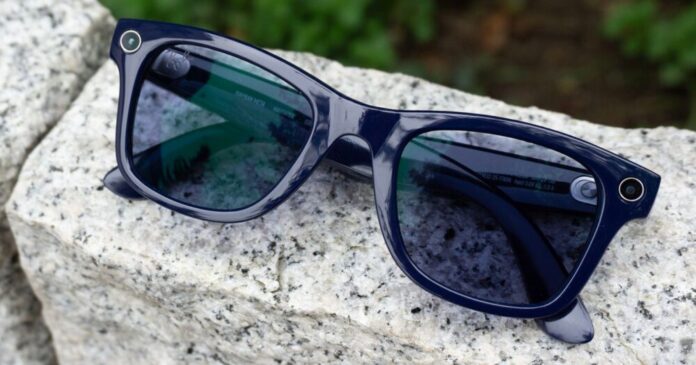
There’s something deeply ironic about a federal enforcement agency warning its own staff that a consumer tech product might violate people’s privacy. But that’s exactly where we are. According to Engadget, ICE has issued an internal memo telling employees they are not allowed to wear Meta smart glasses while on duty. The reason, in the agency’s own words: the glasses “could unintentionally capture, record, or transmit sensitive information, potentially compromising privacy and legal protections.”
The memo covers all ICE employees, not just field agents. A Department of Homeland Security spokesperson framed it as a clarification of an existing ban on personally owned body-worn cameras. But the fact that ICE felt the need to send this memo at all tells you something important: agents have been wearing these glasses, and apparently enough of them were doing it that leadership had to put something in writing.
And they weren’t exactly hiding it. ICE and Customs and Border Protection agents have been spotted wearing Meta’s Ray-Ban smart glasses across at least six states, based on reporting by The Independent. In one case flagged by 404 Media, a CBP agent was seen recording with his glasses even after a policy against it was already in place. Another agent wore a pair during an immigration raid. These aren’t isolated incidents. This became a pattern.
So why does this matter beyond the obvious weirdness of it? Because it exposes a real gap between how these devices are marketed and how they’re actually being used in the field. Meta has positioned the Ray-Ban glasses as a lifestyle product, not a surveillance tool. But when federal agents start wearing them during enforcement operations, that framing collapses. The glasses record. They transmit. And the person being recorded may have no idea it’s happening, because the LED indicator that’s supposed to signal recording has already been shown to be easy to disable.
There’s also a bigger picture here that shouldn’t get lost. Even as DHS warns its staff away from the consumer version, budget documents obtained by journalist Ken Klippenstein suggest ICE wants to develop its own purpose-built smart glasses with biometric identification built in, potentially ready by next year. So the concern isn’t really about smart glasses. It’s about control over the data those glasses collect.
For Meta, the association with immigration enforcement is a problem the company hasn’t directly addressed. The Ray-Ban glasses are already facing scrutiny over an unreleased facial recognition feature that researchers have flagged as a serious surveillance risk. That’s a lot of heat for a product that was supposed to be about hands-free convenience. The gap between what Meta says these glasses are and what people are actually doing with them is getting harder to ignore.