
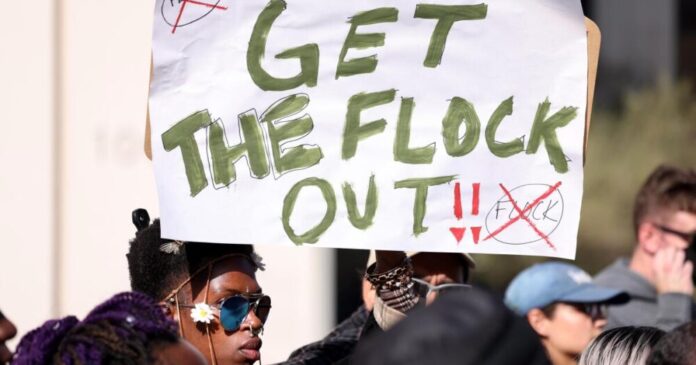
The Los Angeles Police Department has stopped using Flock Safety’s license plate surveillance cameras, citing unresolved questions about who owns the data collected and how it might be shared with other agencies, including federal immigration authorities. The move, which took effect Saturday, ends a three-year agreement that was already due to expire that day.
According to the Los Angeles Times, LAPD Chief Information Officer Dean Gialamas confirmed the suspension and said the department would not resume using Flock technology until clearer contractual terms are in place. “The sticking point is around having very clear terms about who owns the data, what happens with the data once they collect it,” Gialamas said.
The decision follows a formal audit by LAPD Inspector General Matthew Barragan, who recommended that the department pause all new camera deployments and contracts until enforceable rules on data security, privacy, and access controls are established. The suspension puts one of the country’s largest police departments at the center of a growing national debate over automated surveillance and its ties to immigration enforcement.
Flock Safety, headquartered in Atlanta, operates 138 pole-mounted cameras in Los Angeles. The company says it contracts with roughly 5,000 law enforcement agencies across the country, making it one of the dominant players in automated license plate reader technology. The LAPD’s broader plate reader system is much larger, including:
- 248 pole-mounted cameras
- 140 cameras mounted on police vehicle roofs
- 1,500 cameras installed inside police vehicles
- Seven mobile trailer cameras
Flock called the LAPD’s decision a “surprise” and pushed back on the reasons behind it. “We are confident that through ongoing discussions with LAPD, we can clear up the current misconceptions that led to today’s disappointing pause,” a company spokesperson said Saturday. The company maintains that its technology complies with California law limiting what data can be shared with federal authorities.
The concerns are not new. Advocacy groups have raised alarms about Flock’s data-sharing practices since early 2025, particularly the risk that license plate records could be passed to U.S. Immigration and Customs Enforcement. Reports that Flock shared data with federal agencies have already caused other cities to cut ties with the company. In February, Mountain View in Northern California shut off its 30 Flock cameras after officials found that federal and state agencies had accessed city data in violation of local policy. The city council voted weeks later to terminate the contract entirely.
The inspector general’s audit found a significant compliance gap at the LAPD. While three vendors, including Flock, provide license plate reader technology and services, the department does not have formal contracts in place for all of them that address data security, privacy, and access control requirements. The report called for any future agreements to go through the Board of Police Commissioners, whether or not money is exchanged.
The political pressure around this issue runs in both directions. In late May, Los Angeles City Councilmember Ysabel Jurado introduced a motion asking the Board of Police Commissioners to stop entering into any new agreements with Flock or its affiliates. At the same time, homeowner associations and some elected officials have pushed the city to install more plate readers faster, reflecting real tension between public safety interests and civil liberties concerns.
Hamid Khan, an organizer with Stop LAPD Spying, welcomed the pause but said it does not go far enough. “Our demand is that they should end all use of license-plate readers and not negotiate a new contract at all,” he said. His organization sued the city in May to obtain documents related to its Flock agreements, which eventually led the LAPD to hand over some records.
The LAPD had been working with the city attorney’s office on a new contract with Flock before Saturday’s announcement. It is now unclear where that process stands. An LAPD spokesperson declined to comment.