
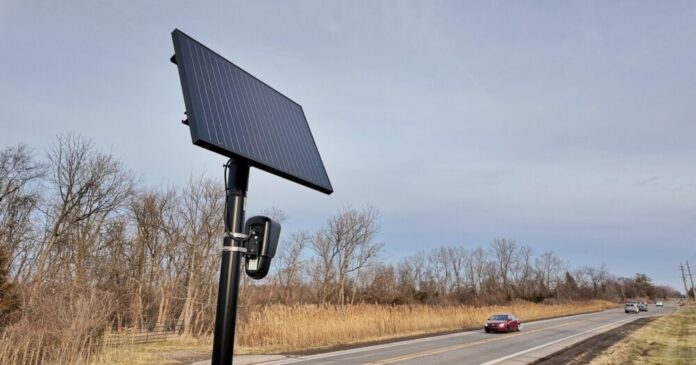
A navigation app from the early 2000s is now doing something Google and Apple won’t. MapQuest lets you see where the cameras are. Not speed traps, but the license plate readers and surveillance units that log your car’s movements whether or not you’ve done anything wrong.
According to Engadget, the new toggle displays known outdoor cameras and plate readers, including Flock. It also covers hardware from Motorola Solutions (Vigilant), Genetec, Axis Communications, Axon, Leonardo (ELSAG), Neology, Rekor, PlateSmart, Ubicquia and Verkada. The layer sits next to the traffic and incidents options, so you don’t have to hunt for it.
The timing is odd but not random. MapQuest has had a strange run lately. Its app surged in popularity after it refused to relabel Lake Ontario as Lake America, unlike Google Maps and Apple Maps. It also added long-overdue basics like Android Auto support and public transit directions. The company announced the camera layer with a short video set to Rockwell’s “Somebody’s Watching Me.” Subtle it is not.
Now the skeptical part. The word that matters in the announcement is “known.” The map can only show cameras someone has documented, and that data usually comes from public records, community mapping efforts and volunteers. Plenty of devices are missing. Private cameras, unmarked installs and newly deployed units won’t appear. So an empty street on the map does not mean an unwatched street.
Still, the value is real. Automated plate readers have spread quickly across American towns, often bought by police departments, homeowner associations and businesses with little public debate. Most people have no idea how many sit along their commute. Seeing them as dots on a familiar map makes the scale hard to ignore. That matters for anyone attending a city council meeting, questioning a contract renewal, or trying to get cameras removed from their neighborhood.
What it won’t do is help you avoid them. You probably can’t route around these cameras on your daily drive, and the app isn’t pretending otherwise. The point is awareness, not evasion.
There’s also a question MapQuest hasn’t answered. Where does the data come from, and how often is it updated? A surveillance map is only as honest as its sources. And an app that asks for your location to show you the cameras is collecting some data of its own. Check the permissions before you toggle anything.
Even so, a mainstream app putting this information in front of ordinary users is a small shift. Surveillance infrastructure has depended on being invisible. Making it visible is where pushback starts.