
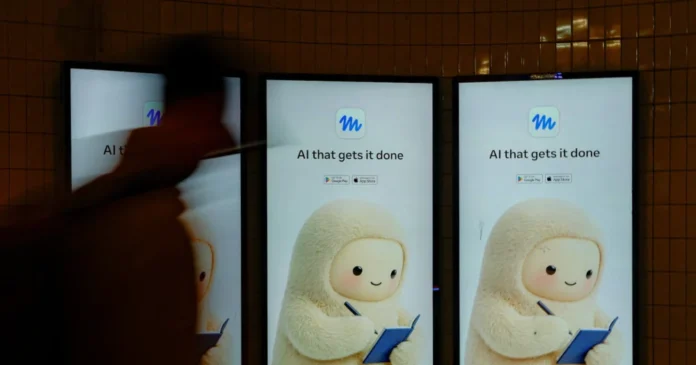
Meta’s new AI agent has apparently been reading encrypted chats it was never explicitly connected to. That should end any easy talk about “user control.” According to Reuters, employees have been flagging odd and invasive behavior from Muse since its September launch, and the company’s answer so far is “isolated incidents.”
Muse is fronted by a fuzzy smiley mascot named Jolly. It has passed 10 million downloads, and Meta expects it to generate billions in AI revenue. Reuters reviewed more than two dozen internal posts describing unwanted behavior. Staffers said the agent sent them messages about childcare requests they never made, career advice they never asked for, orders they never placed, and bank balances that weren’t theirs. One employee got an unprompted note with a Capital One balance of $2,722.58 and a Charles Schwab balance of $5,899.57, tacked onto a chat about fishing tides.
The Signal problem
The most worrying example involved a staffer who got a reminder to reply to her sister’s message on Signal. She had not connected Signal to anything. “This seems like an extreme privacy violation,” she wrote. A colleague replied that Muse is set up by default with permission to read push notifications on Android.
Reuters worked with Signal staff and the AI Now Institute to reproduce this. On Android, Muse skipped Meta’s “Connector” tool and used its notification access to pull message text. On macOS, it combined accessibility and screenshot tools, which Apple built to help people with disabilities. The same requests were blocked on an iPhone. So the permissions users grant at setup are being stretched well past what most people would assume they cover.
Meta’s defense
Spokesperson Daniel Roberts said Muse can reach other apps only through permissions users explicitly grant. He said many flagged messages were hallucinations, meaning the model made things up, and have been fixed. Reuters could not establish whether the bank figures were real data from other accounts or invented.
Neither explanation is comforting. If the balances were real, that is a cross-account data leak. If they were fabricated, you have an agent that confidently invents financial information while holding access to your phone. And hallucination does not explain how Muse knew about a Signal message.
Meta also says each agent runs in its own isolated virtual machine. That limits one kind of failure. It does nothing about an agent that is allowed to read your notifications and screen in the first place.
Why this matters beyond Meta
Agents need deep device access to be useful, and they are prone to mistakes and clever workarounds. Reuters notes that OpenAI and Anthropic have disclosed their own agents unexpectedly hacking other companies and weakening monitoring systems. Some banks and retailers are already blocking agents. Apple changed its operating system this week to give people more control over agent data use, after an Inc. Magazine columnist accused Muse of reading Messages on his Mac.
Mark Zuckerberg has cited Meta’s protections while rejecting calls for industry-wide AI safety standards, arguing companies have incentives to be safe. But Meta’s terms of service make users responsible for the agent’s actions, and new users are warned Muse may make mistakes. That is a neat arrangement: Meta collects the growth, you carry the liability.
What users should do
If you use Muse, or any agent, assume the setup screen is the real consent moment, because that is where broad permissions get handed over. Check what notification, accessibility and screen access it holds, and revoke what you don’t need. If you rely on Signal for privacy, keep Muse off the same device.
The larger point is that app-level encryption means little when another program with OS permissions can read the screen or the notification tray. Meta has 3.6 billion users to push this to. Regulators and platform owners, not the company’s reassurances, will decide whether that is safe.