
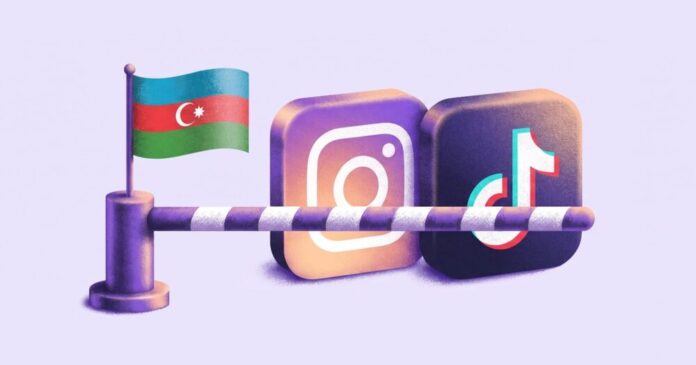
When a government blocks social media and says nothing about it, that silence is itself a statement. Azerbaijan did exactly that this week, cutting off Instagram, TikTok, and X across multiple internet service providers as students took to the streets over a school dress code targeting the hijab. No official explanation. No comment from the platforms. Just a wall where information used to flow.
What got blocked, and when
According to Proton VPN, problems started early Monday morning local time on October 12. Instagram feeds stopped updating first, then the platform stopped loading entirely. TikTok followed the same pattern: uploads failed, then the app stopped opening. Users reported to Agence France-Presse that the platforms only worked through a VPN. Outage trackers confirmed disruption coming from Azerbaijan, but found no global outage on either platform. By October 13, NetBlocks had confirmed that TikTok, Instagram, and X were blocked across multiple providers in the country.
The protests behind the blocks
The trigger was a school uniform policy approved by Azerbaijan’s government on September 21, banning clothing that conflicts with the “secular nature of education.” The rules don’t name the hijab, but rights defenders say that’s exactly what they target. On October 6, similar restrictions applied to teachers. When schools began enforcing the rules on October 12, girls wearing hijabs were turned away at the door. Some sat outside and studied in the street. A teacher held class outdoors. Other students boycotted lessons in solidarity.
The Interior Ministry said police arrested 37 people in Baku after confrontations near schools. Activists put the detention count above 200. One anonymous Baku activist told reporters that calls to protest were spreading through Instagram and TikTok, including from accounts based abroad. That’s not confirmed as the official reason for the blocks, but it fits the pattern.
This has happened before
Azerbaijan has a documented history of shutting down social media during moments of political pressure:
- September 2020: During the Nagorno-Karabakh conflict with Armenia, authorities restricted most major platforms and slowed internet access for over a month.
- September 2022: TikTok was restricted on several providers during border clashes.
- September 2023: TikTok was blocked after military operations in Nagorno-Karabakh. Proton VPN recorded a 2,500% spike in sign-ups from Azerbaijan that month.
This year, Azerbaijan also expanded the legal tools available for censorship. A new law lets authorities block websites without a court order, citing reasons that include “disinformation” threatening public safety. No official has confirmed this law is being applied right now, but the powers exist and are clearly being used.
What the VPN data tells us
Proton’s own observatory data shows VPN sign-ups from Azerbaijan started climbing on October 11 as protests spread, then shot up more than 4,000% above the baseline after the blocks hit. That number reflects real people, scrambling to reach news, contact family, and coordinate in real time. Blocking social media during a protest doesn’t just restrict speech. It disrupts basic communication at the exact moment people need it most. And that, stripped of any political framing, is the point.