
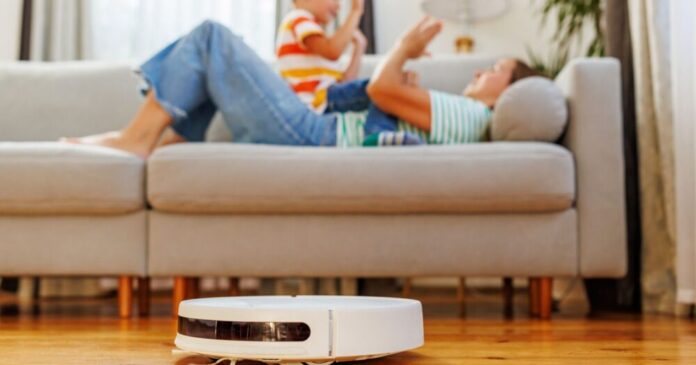
Your robot vacuum is a roaming sensor package that you invited into your home and then connected to someone else’s server. That should bother you more than it probably does.
According to Engadget, depending on the model, these devices can build floor maps, log cleaning histories, carry microphones and offer remote video viewing. What they collect, and where it goes, varies by product. That vagueness is the problem. Most buyers have no idea which category their vacuum falls into.
Cloud connectivity makes it worse. If you can check on your vacuum from the office, that traffic often runs through the manufacturer’s servers. A floor map or a video feed is a handy feature, but it can also reveal things you’d never hand to a stranger. Not every connected vacuum is secretly recording you or shopping your home layout around. But collecting data and protecting privacy are different things, and companies like to blur them in dense legalese nobody reads.
The risk isn’t hypothetical. Sammy Azdoufal tried to remotely control his own DJI Romo and ended up with access to about 7,000 vacuums worldwide. DJI says it fixed the backend permission flaw with two updates on February 10, 2026. The server recognized a legitimate customer but never limited that customer to their own device. Azdoufal used Claude Code to help reverse-engineer the communications, but the AI didn’t cause the hole. Broken authorization did. No strong password on your end fixes that.
Breaches are only half of it. Routine operation also leaks data. iRobot’s privacy policy says connected models may send room names, floor types, detected objects, robot movements and Wi-Fi network details, not just maps. That’s a steady stream most owners never see.
So which vacuum is the most private? There’s no clear winner. Look for on-device navigation and image processing, treat mandatory cloud features as a deal-breaker, and check how diagnostic data is shared. A camera-free model cuts one kind of exposure, but “no camera” doesn’t mean “no data collection.” Maps and account details can still leave your house.
Matic is one local-first option worth a look. Its policy says maps stream to the app over home Wi-Fi and processing happens on the robot. It also lists exceptions: remote app use can send data through an encrypted cloud connection only with explicit consent, and audio or video sharing requires authorized support.
Still, a policy is a promise, not proof. A company can sincerely intend not to share something, and an attacker can still reach it if the data exists. The DJI case shows exactly that.
If you already own one, set a strong password, turn on two-factor authentication and keep the firmware current. Disable remote viewing and similar connected features unless you really use them. The best defense is a device that collects less in the first place, and buyers should start demanding that.