
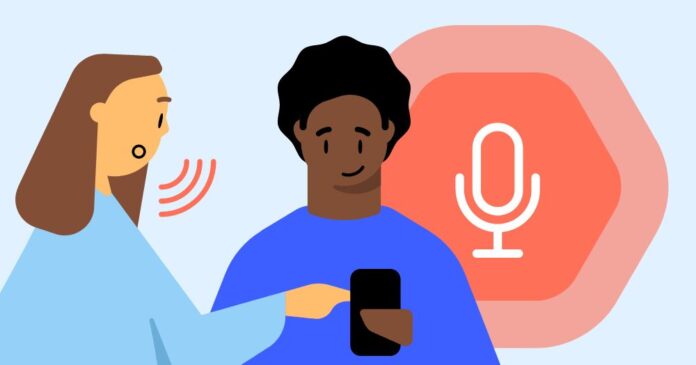
You may have heard the term and in this article, we’re going to explain it in more detail. We’re talking about cross-device tracking, which is considered a controversial marketing technique that — as its name says — presumes companies tracking users across several devices. This, in turn, raises many transparency and privacy concerns, as many users are not even aware of being tracked while switching between multiple devices.
And guess what? Cross-device tracking is widespread, according to a recent NordVPN survey. We’ll get more into that, but first, let us define the term, shall we?
Cross-device tracking 101
Cross-device tracking is a marketing strategy that involves companies tracking users across multiple devices, such as their computers, smartphones, smart TVs, and tablets. Marketers use cross-device tracking to create user profiles, so they can understand the customer better and target them more effectively with ads.
That all seems nice for marketers, but for end users – the picture is rather bleak. The main problem with this strategy is that it often lacks transparency and privacy.
Cross-device tracking involves a few techniques — such as cookies, tracking pixels, and fingerprinting — that are used to link user activity across multiple devices. There is one technique that is especially scary, and it involves using ultrasonic beacons. These are inaudible sounds with encoded data through which a listening device can receive information. Humans can’t hear these sounds because their frequency is too high (generally above 18 kHz), but they can be detected by your phone or laptop.
A real life example could include the user watching TV when an ad with embedded ultrasonic beacons comes on. Then, when you visit some website that has ads, you will see the same ad you’ve just seen on TV. Yes, it’s scary.
Cross-device tracking is widespread
A recent survey commissioned by NordVPN in 11 countries showed that cross-device tracking involving ultrasonic beacons is widespread. In fact, over half of the American respondents (53%) said they had noticed ads on their devices for a product/service they recently spoke about or saw on TV but had not searched for on that device.
In the UK, 45% of respondents noticed such ads, while in Canada and Australia, 33% and 37% noticed them respectively.
Of those who noticed these ads, a high proportion reported feeling “followed”:
- 49% (UK)
- 46% (Canada)
- 42% (Australia)
- 39% (the U.S.)
What’s more, 13% of UK respondents also reported feeling “scared” after noticing these ads. In (weird) contrast, 20% of American and 17% of Australian respondents said they were “happy” because they were shown ads about something they were interested in. Furthermore, 12% of Americans also said they felt “special/important” after seeing these targeted ads — but this sentiment wasn’t echoed in other markets. Guess people think differently about ads in different countries…
Smartphone users better notice tracking
When asked what devices they noticed targeted ads on after talking about a topic or seeing an ad on TV, the majority of respondents said it was their smartphone:
- 81% (UK)
- 77% (Australia)
- 77% (the U.S.)
- 76% (Canada)
In addition, 52% of respondents in the U.S. noticed it on their computers, 50% in Australia, 49% in Canada and only 33% in the UK.
Many users don’t know how to manage permissions
The majority of respondents in Australia (65%), Canada (65%), and the UK (62%) didn’t know they could restrict their phone permissions and stop them from listening.
In the U.S., 50% of respondents said they were aware they could change their phone’s permissions.
What can you do to reduce cross-device tracking?
There are several things you could do to limit cross-device tracking and gain more control over your privacy. Here’s what you should do:
- Review your app permissions. While you can’t stop ultrasonic beacons from emitting sound frequencies around you, you can restrict your devices from listening. Check the permissions you’ve given the apps on your phone, and make sure only those that need access to the microphone (video call apps) actually have that permission.
- Actually, read privacy policies. Let’s face it; most users don’t read privacy policies. Since you’re reading this, I’ll presume you are willing to change. So go through the privacy policies of the services you want to use, and only if you agree with what they say – start using them. Again, focus on mentions of your phone’s microphone and for what purpose it will be used. Also, look for “inaudible sounds.”
- Use a VPN. Although a VPN won’t stop your phone from listening, it will enhance your overall digital privacy and security. It will do that by securing your internet traffic with encryption and by masking your IP address. As a result, your internet activity will be hidden from the prying eyes of your ISP, governments, and other third parties.
Survey methodology
The NordVPN survey involved 10,800 respondents across 11 countries — including Australia, Canada, Germany, Spain, France, Italy, the Netherlands, Poland, Sweden, the UK, and the US. An external agency conducted the surveys between 23rd February and 7th March 2023. Respondents were asked a set of questions about advertising and cross-device tracking. The samples were representative of the adult population of the respective country (18+).

Pros
Cons
- 5,000+ servers in the network
- Easy to use - install it and forget it
- One license is good for up to 6 devices
- Strict zero-logs policy
- 30-day money-back guarantee
- Chrome extension is just a proxy