
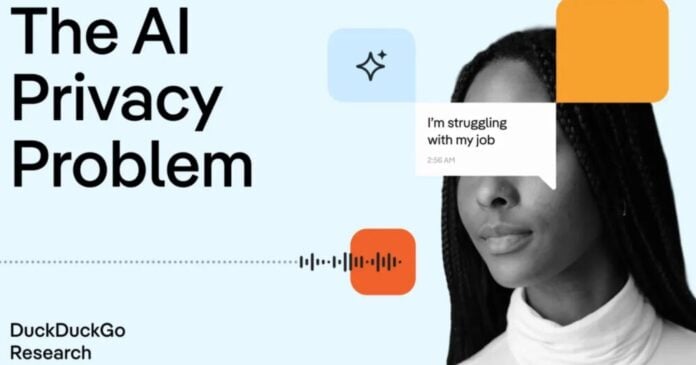
Nearly a third of people using AI chatbots have shared something with a machine that they wouldn’t say to the people closest to them. That number alone should make anyone pause. But what makes it more alarming is that most of those same users had no idea their conversations might be used to train AI models, or that law enforcement could subpoena them.
According to Android Headlines, DuckDuckGo surveyed nearly 2,000 US adults about their AI chatbot habits. The results paint a picture of a public that has grown comfortable being remarkably open with AI tools, while remaining largely in the dark about the privacy implications of doing so.
What people are actually sharing
The headline figure is 32%: the share of AI users who have told a chatbot something they wouldn’t share with close friends or family. Among people who describe themselves as AI enthusiasts, that number jumps to 56%. Parents are also significantly more likely to confide in chatbots than non-parents, with 43% of AI-using parents saying they’ve shared things with a chatbot they’ve never told anyone, compared to 25% of users without children at home.
So people are treating these tools like a therapist, a diary, or a confidant. And AI companies have actively encouraged that framing through advertising and media. The problem is that the privacy reality doesn’t match the intimacy of the experience.
The knowledge gap is significant
This is where the survey gets genuinely troubling. Only 46% of respondents knew that most chatbots train on user conversations by default. That means a majority of people sharing sensitive, personal thoughts with AI had no idea that information could feed back into the model. And just 25% realized that AI chat logs can be subpoenaed by law enforcement.
Once users were told how AI companies typically use their conversations, 58% said they were uncomfortable with it. A full 30% described feeling “very uncomfortable.” That gap between what people assume and what’s actually happening is exactly the kind of information asymmetry that benefits companies and hurts users.
Trust, or the lack of it
The survey also asked about trust. People said they trust large AI companies slightly more than they trust the US government with their data. But that’s a low bar. Still, 39% said they have no trust in AI companies at all. Given what we know about how these companies handle data, that skepticism is reasonable.
DuckDuckGo points out that AI conversations aren’t like search queries. A single chatbot exchange can expose a person’s thought process, emotional state, and communication patterns in ways that a keyword search never could. The depth of what gets shared is fundamentally different, and the data policies haven’t caught up.
What users can actually do right now
DuckDuckGo’s position is that it’s not too late to change habits. The company argues that your next AI conversation is more valuable to Big Tech than anything you’ve already shared, which means switching to more privacy-focused tools still matters. The survey recommends:
- Using AI tools that have clear, transparent data-handling policies
- Checking whether a chatbot trains on conversations by default, and opting out if possible
- Treating AI conversations with the same caution you’d apply to any logged, stored communication
That’s practical advice. But it puts the burden on individual users to navigate corporate data practices that most people don’t have the time or technical background to fully assess. Regulation is the real fix here. And that, as usual, is nowhere near ready.