
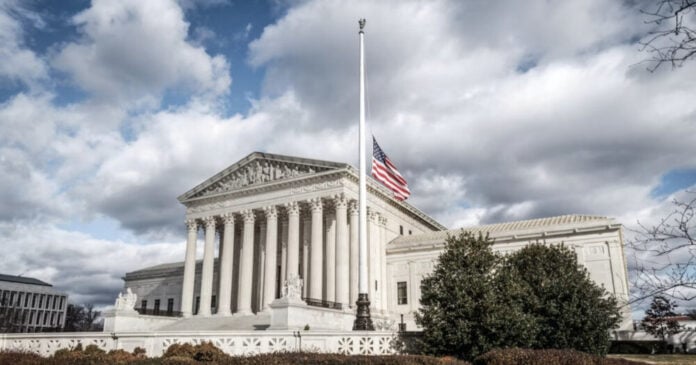
The US Supreme Court has placed strict new limits on how law enforcement can use geofence warrants, a surveillance technique that lets police pull location data from tech company databases to identify who was near a crime scene. The ruling is one of the most significant court decisions on digital privacy in years, and it changes the rules for how investigators can access data held by companies like Google.
In the 6-3 decision, the court ruled that individuals have a reasonable expectation of privacy in their cell phone location data. Justice Elena Kagan wrote that geofence warrants violate the Fourth Amendment’s prohibition on unreasonable searches. As reported by Engadget, law enforcement agencies will now need to obtain a proper search warrant, backed by probable cause, before demanding that tech companies turn over this kind of data.
That distinction matters. A standard search warrant requires police to show a judge they have specific reasons to suspect a particular person. Geofence warrants, by contrast, work the other way around: investigators scoop up data on everyone in an area first, then try to find a suspect from that pool. Critics have long argued this is exactly the kind of dragnet search the Fourth Amendment was designed to prevent.
The case that triggered this ruling started with a bank robbery in Virginia. A man stole $195,000, and the case went cold. Detectives then served Google with a geofence warrant covering the area around the bank for an hour before and after the crime. Google provided data on three of the 19 people flagged as being nearby. One of them, Okello Chatrie, turned out to be the suspect and later confessed.
Chatrie’s attorneys argued that the search was unconstitutional because it forced Google to comb through the data of millions of users, none of whom were under any individual suspicion. Their core argument was that geofence searches allow the government to “search first and develop suspicions later,” which inverts the legal standard that search warrants are supposed to enforce.
The government pushed back with a straightforward counterargument: location data isn’t protected by the Constitution because people effectively choose to share it by not disabling geotracking and background app permissions on their phones. The court rejected that reasoning.
A few things remain unclear following the decision:
- It’s not yet known how the ruling will affect past criminal cases that relied on geofence warrants
- Chatrie’s own sentence is not expected to change as a result
- It’s unclear how quickly law enforcement agencies will adapt their practices
The broader significance here goes beyond one case. Geofence warrants became increasingly common over the past decade, with Google alone receiving thousands of them each year. Tech companies have pushed back on the practice at various points, but without a clear legal standard, compliance was often easier than fighting each request in court.
This ruling gives privacy advocates something concrete to point to. It also puts pressure on Congress and state legislatures to codify clearer rules around digital surveillance. For now, though, the message from the court is unambiguous: wanting to know who was near a crime scene is not, on its own, enough reason to search the location history of everyone in the area.